
Last updated on July 31, 2026
When diesel moves fast, domestic car shipping does not always change in the way customers expect. A quote may not jump dollar-for-dollar with the fuel pump, and a lower fuel week does not automatically mean same-day pickup. The real effect often shows up in the pickup window: how quickly a carrier accepts the load, whether the lane needs more flexible dates, and whether a rural or hard-to-match route needs a stronger offer.
As of the latest U.S. Energy Information Administration update checked July 31, the U.S. on-highway diesel average was $5.313 per gallon for July 27, 2026, up 17.9 cents from the prior week and up $1.508 from a year earlier. Regional diesel prices ranged from $5.087 on the Gulf Coast to $6.067 on the West Coast, with California at $6.670. That kind of regional spread matters for carriers because a route touching expensive fuel markets can cost more to run than a simple mileage calculation suggests.
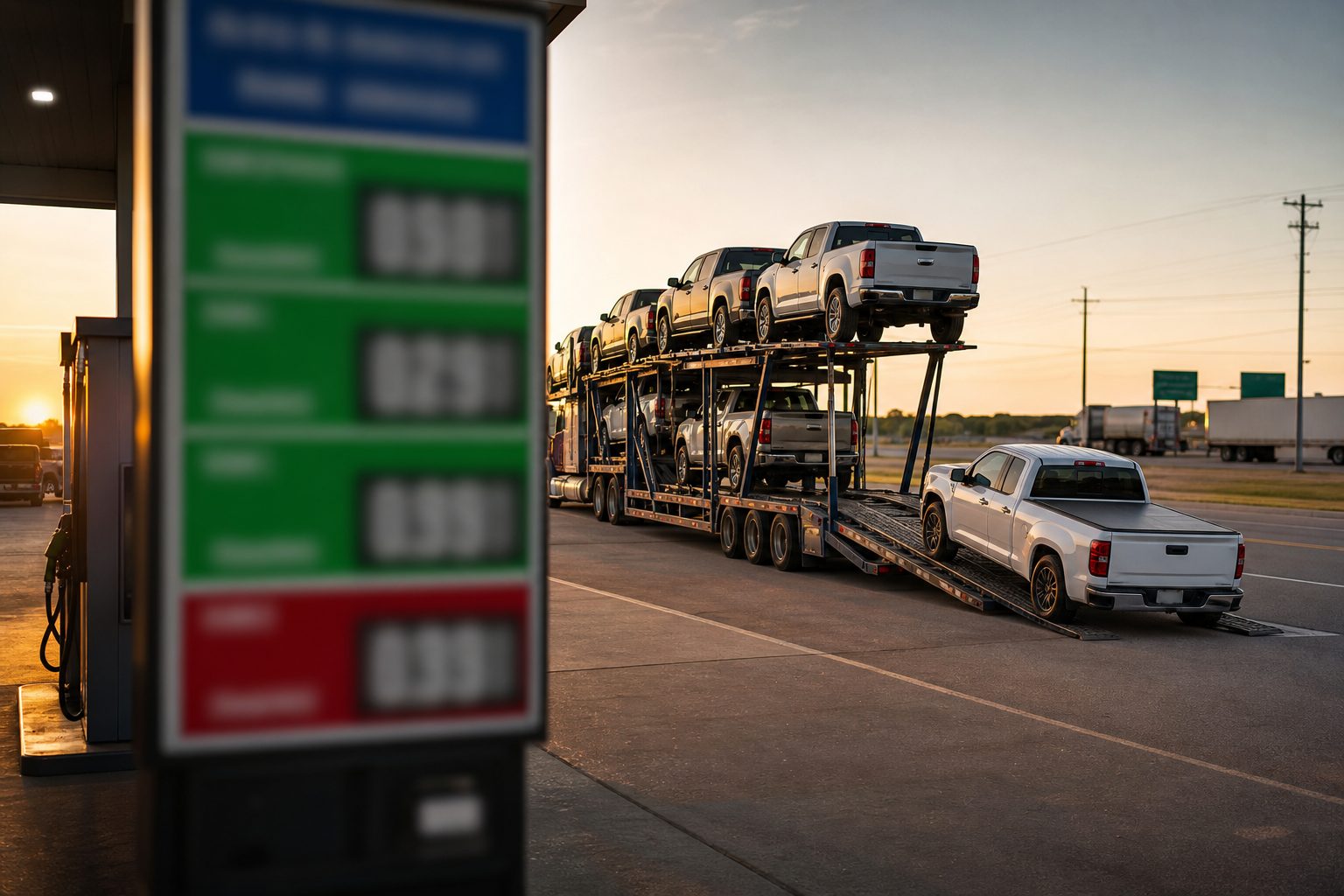
Diesel affects pickup windows before it affects the final invoice
A car carrier is usually deciding whether a load fits the truck’s next profitable route. Diesel is part of that decision, but it is not the only part. The driver is also looking at distance, deadhead miles, tolls, equipment type, vehicle size, pickup access, delivery access, and whether there is another paying load nearby.
That is why fuel pressure often affects timing first. If the price posted to the carrier board is thin, the load may sit while better-paying or easier loads get accepted. If the offer matches the lane and the pickup window is flexible, the same route may cover faster without panic pricing.
For customers, the practical lesson is simple: a quote is not just a math problem. It is a carrier-acceptance problem.

Why diesel spikes can narrow carrier options
Diesel-heavy weeks make carriers more selective because a missed backhaul, a bad pickup appointment, or a long detour can erase margin quickly. The impact is strongest on moves that already require extra effort:
- Long-haul routes where fuel is a major share of operating cost
- Rural pickups or deliveries away from dense carrier lanes
- Oversized pickups, modified trucks, inoperable vehicles, or special equipment needs
- Short-notice moves where the carrier has less time to build a full route
- Routes through high-fuel regions such as parts of the West Coast
In those situations, the pickup window may need to be wider, or the price may need to be more competitive, before a qualified carrier accepts the job.
Lower diesel does not always create instant discounts
Earlier in July, industry market updates pointed to fuel relief after geopolitical pressure eased, but they also warned that diesel remained elevated and freight capacity was not loose everywhere. C.H. Robinson’s July freight update described tighter truckload carrier supply, higher spot rates, and renewed contract pricing pressure, while noting that diesel relief remained fragile and shippers should plan for continued fuel sensitivity.
Auto logistics has the same pattern. Ship.Cars’ July auto freight market read noted that lower diesel can help carriers, but long-haul moves, rural pickups, and lanes without easy return loads may still need pricing that protects carrier margins. In other words, diesel is one input. Carrier availability and lane quality still decide whether the truck takes the load.
What this means for pickup windows
A pickup window is the time range a carrier can realistically work with, not a guaranteed appointment unless the service is specifically priced and arranged that way. When diesel is volatile, narrower windows are harder because the carrier has less room to match the load with other vehicles.
Here is how the tradeoff usually works:
- More flexible window: More carriers can consider the load, especially on normal lanes.
- Very tight window: The load may need a stronger price because the truck has to fit your timing instead of building the most efficient route.
- Rural or low-density lane: Flexibility matters more because fewer carriers are already passing nearby.
- High-fuel region: A carrier may price more cautiously or wait for complementary freight.
If your pickup date is firm because of a flight, closing, military report date, auction release, or dealership deadline, tell the broker early. The dispatch strategy should be different from a flexible residential move.
How to protect your timing without overpaying
You cannot control diesel prices, but you can make your shipment easier for a good carrier to accept.
- Book early enough to build a real route. More notice gives dispatch more carrier options.
- Give a realistic pickup window. A two- to four-day window is often easier to cover than a single-day request.
- Be clear about vehicle details. Modified height, running condition, oversized tires, camper shells, and added weight change carrier fit.
- Use accessible pickup and delivery points. A nearby shopping center or wide street can save time when residential access is tight.
- Avoid chasing the lowest posted number. If a quote is below what the lane needs, it can delay pickup instead of saving money.
- Ask whether the quote is built for acceptance. The right question is not only “what is the price?” It is “will this move at that price in the requested window?”
When to choose a tighter paid window
Sometimes paying for urgency is the right move. Consider a tighter, more aggressive dispatch plan if:
- You have less than a week before the vehicle must be picked up
- Storage fees, rental car costs, or travel changes would cost more than a stronger transport offer
- The vehicle is in a rural area or at an auction with release deadlines
- The lane crosses an expensive fuel region or requires a detour
- You need enclosed transport or specialty equipment
A better pickup window is not always about paying the most. It is about making the load attractive enough for the right carrier at the right time.
Bottom line
Diesel prices affect domestic car shipping because they change carrier economics. The effect may appear as a higher quote, but it often appears first as a wider pickup window, slower carrier acceptance, or more selectivity on difficult lanes.
For the best result, compare price and timing together. A realistic quote with a workable pickup window usually beats a cheap number that does not get accepted.

About The Author
Aldo Flores
Aldo Flores is the founder and CEO of Trans Global Auto Logistics (TGAL) and Transcar Auto Shippers. With over 25 years in international vehicle shipping and domestic auto transport, he oversees operations across five logistics companies based in Arlington, Texas.


October 22, 2026

October 15, 2026

October 8, 2026

October 8, 2026

August 13, 2026