
Last updated on July 19, 2026
The cheapest way to ship a car state to state is not always the lowest quote in your inbox.
That sounds convenient for a transport company to say, but it is also how the market works. A quote that is too low to attract a carrier is not a discount. It is a delay with a prettier number on it.
If you want to save money without getting stuck, the goal is simple: choose the lowest realistic option. That means the right trailer type, enough pickup flexibility, a clear deposit policy, verified carrier insurance, and a broker who understands what carriers will actually accept on your lane.
Here is how to keep the price down without handing your move to the cheapest chaos merchant on the load board.
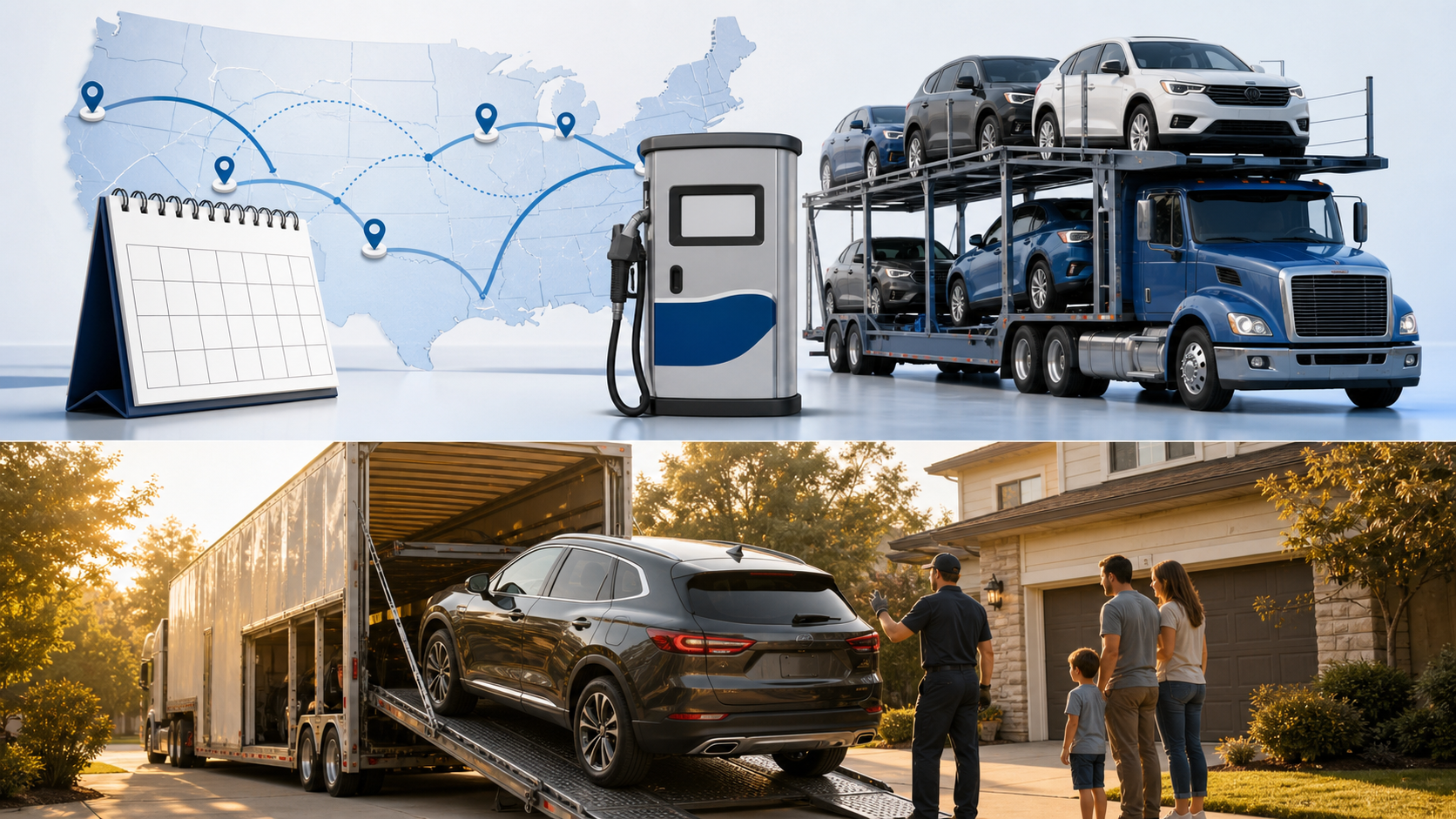
Start with open carrier unless the vehicle truly needs enclosed transport
For most standard cars, SUVs, and pickup trucks, open carrier is the cheapest practical option.
Open carriers are the multi-car trailers you see on the highway every day. There are more of them, they run more lanes, and they usually cost less than enclosed equipment. If you are shipping a daily driver, a family vehicle, or a used car purchase, open transport is usually the right place to start.
Enclosed transport makes sense when the vehicle needs extra protection:
- Classic cars
- High-value luxury vehicles
- Exotic cars
- Fresh restorations
- Low-clearance vehicles
- Cars where weather exposure is a real concern
Enclosed service usually costs more because there are fewer trailers, fewer available spots, and more specialized loading requirements. If the car does not need that level of protection, open carrier is usually where the savings are.
Give the dispatcher flexible dates
Flexibility saves money because carriers price around route fit.
A narrow pickup window can force the dispatcher to chase a truck that is available on one exact day. A wider window lets them match your vehicle with a carrier already running that lane.
A good target is a pickup window of several days instead of one hard appointment. If you can say, “The vehicle is available starting Monday, and pickup anytime through Friday works,” you are usually in a better position than someone who needs Tuesday at 2:00 PM.
That does not mean you should accept vague service. You still need clear expectations. Transcar’s 7-Day Pickup Guarantee is built around that balance: we quote the move to get picked up within seven days, instead of tossing out a fantasy number and hoping a carrier eventually bites.
Be careful with terminal shipping promises
People often ask if terminal-to-terminal shipping is cheaper. Sometimes it can be, but it is not always the easy savings trick it sounds like.
For standard state-to-state auto transport, door-to-door or as-close-as-legally-and-safely-possible service is often more practical. Most auto carriers are built around direct pickup and delivery, not storage terminals in every city.
Terminal or meetup options may help when:
- Your pickup or delivery address is difficult for a large truck
- You live far from a common carrier route
- You can meet near a highway, truck stop, shopping center, auction, dealership, or wide commercial lot
- A port, auction, or storage yard is already part of the move
The key is not “terminal” by default. The key is access. If you can make the stop easier for the carrier, you may improve the rate or the pickup speed.
Do not agree to leave your car somewhere unless you understand storage fees, access hours, liability, release rules, and who is responsible for the vehicle while it sits there. A cheap quote can get expensive fast if storage starts ticking like a meter in a port parking lot.
Avoid fake low quotes
The most common trap in car shipping is the quote that looks too good because it is too low to dispatch.
Some brokers quote low to win your information or collect a deposit. Then the car sits. Later, they call back and say the carrier needs more money. By then you may be up against a flight, closing date, military report date, auction deadline, or move-out date.
Watch for these warning signs:
- The quote is hundreds less than every other serious quote
- The broker guarantees an exact pickup day before assigning a carrier
- The company cannot explain what carrier pay is built into the quote
- The deposit is large or non-refundable before dispatch
- They pressure you to sign immediately
- The written terms do not match what they said on the phone
- They will not give you a clear pickup window
- They dodge questions about insurance, MC number, or DOT number
A low quote is not automatically bad. But a low quote with vague terms is how people get burned.
Check MC, DOT, and insurance before you hand over the keys
Interstate auto transport is regulated. Companies arranging or performing interstate transport should be properly registered, and FMCSA explains that operating authority is commonly identified by an MC, FF, or MX number depending on the authority granted.
Before booking, check:
- The broker’s MC number or registration details
- The carrier’s USDOT and MC information when assigned
- Cargo insurance amount and exclusions
- Whether the carrier name on pickup matches the assigned carrier
- The bill of lading inspection process
- Claims instructions before there is a claim
You can use FMCSA tools to look up registration and safety information. Do not rely only on a logo, a nice website, or a quote email. Those are cheap. Cargo insurance is not.
Also ask how the broker verifies carriers. A serious broker should be able to explain how they screen carrier authority, insurance, route fit, and performance. If the answer sounds like, “We just post it and see who calls,” keep your guard up.
Understand deposits before you book
Deposits are not automatically a scam. Many brokers charge a broker fee or deposit as part of the booking.
The problem is when the deposit is unclear, too large, charged before any real dispatch work happens, or called “fully refundable” with fine print that says otherwise.
Before paying anything, confirm:
- How much is due now
- When the balance is due
- Who receives the balance: broker or carrier
- Whether the carrier needs cash, cashier’s check, card, or another payment method at delivery
- Whether the deposit is refundable if no carrier is assigned
- What happens if the pickup window is missed
- Whether the quoted total includes broker fee and carrier pay
The total matters more than the deposit. A $99 deposit on a bad quote is still a bad quote. That is not savings. That is the cover charge to a paperwork rodeo.
Know what realistic pricing looks like
There is no single honest price for every state-to-state shipment. Pricing changes by lane, distance, vehicle size, pickup location, delivery location, fuel, season, trailer type, and how fast you need the move handled.
As a general consumer guide:
- Shorter regional moves often cost more per mile because the carrier still has loading time, dispatch time, insurance, and route planning baked in.
- Longer interstate moves usually cost less per mile, but the total price is higher.
- Open carrier is usually the lowest-cost service for standard vehicles.
- Enclosed transport often costs noticeably more because equipment is more limited.
- Rural pickup or delivery can cost more than major metro routes.
- Inoperable vehicles usually cost more because they require winching or special handling.
- Oversized trucks, lifted vehicles, modified vehicles, and heavy SUVs can change the price.
If every quote is around the same range and one company is far below it, ask why. Sometimes they found a good match. Sometimes they are underquoting the move and planning to fix the number later.
The honest answer is not always the cheapest answer on day one. It is the number that gets a real insured carrier to accept the load.
Book early, but not blindly
Last-minute moves can cost more because fewer carrier options are available. If you know the vehicle needs to move, start getting quotes several days ahead. More notice gives the dispatcher room to find a better route match.
But do not book so early that the details are still unknown. A quote depends on real information:
- Exact pickup and delivery cities or ZIP codes
- Vehicle year, make, and model
- Running condition
- Open or enclosed preference
- Earliest pickup date
- Delivery constraints
- Contact person at both ends
Bad information creates bad pricing. If the vehicle is modified, inoperable, oversized, loaded with personal items, or located somewhere hard to access, say so upfront. Surprises at pickup are where cheap quotes go to die.
Use a broker who prices for pickup, not just attention
A broker’s job is not just to email a number. The job is to match your vehicle with a qualified carrier at a price the market will accept.
That means the broker should understand:
- Which carriers run your lane
- What similar loads are moving for
- Whether your pickup location is easy or difficult
- How your timing affects the rate
- What insurance and equipment the carrier needs
- Whether the quoted number is likely to dispatch
At Transcar, we would rather tell you the realistic price upfront than win the quote with a number that cannot move the car. That is also why our 7-Day Pickup Guarantee matters. It keeps the quote tied to actual pickup performance, not wishful thinking.
Quick checklist for cheaper state-to-state car shipping
Use this before you book:
- Choose open carrier unless the vehicle truly needs enclosed protection
- Give a flexible pickup window when possible
- Meet the carrier somewhere accessible if your address is difficult
- Compare total price, not just deposit
- Avoid quotes that are far below the market without a clear explanation
- Confirm MC, DOT, and insurance details
- Get terms in writing
- Ask what happens if pickup is delayed
- Be honest about vehicle size, condition, and modifications
- Book with enough notice for the dispatcher to find a real carrier match
The bottom line
The cheapest way to ship a car state to state is to remove the things that make the move hard: tight dates, difficult access, unclear vehicle details, and unrealistic pricing.
Open carrier, flexible timing, and an accessible pickup or delivery location can all help lower the cost. But the lowest quote is only useful if an insured carrier will actually pick up the vehicle.
If a price looks too good to be true, ask what carrier is going to take it, what insurance is in place, and what happens if nobody accepts the load. The answer will tell you whether you found a deal or just bought a delay.
Need a state-to-state quote that is priced to move? Get a Transcar quote and ask about the 7-Day Pickup Guarantee.

About The Author
Aldo Flores
Aldo Flores is the founder and CEO of Trans Global Auto Logistics (TGAL) and Transcar Auto Shippers. With over 25 years in international vehicle shipping and domestic auto transport, he oversees operations across five logistics companies based in Arlington, Texas.


October 22, 2026

October 15, 2026

October 8, 2026

October 8, 2026

August 13, 2026