
Last updated on July 19, 2026
The honest answer: it depends.
The useful answer: car shipping in 2026 is priced around distance, route strength, diesel, vehicle size, transport type, timing, and how hard the load is for a carrier to fit into a profitable trip.
That last part is what most cheap quote websites leave out.
A carrier is not just moving your car from Point A to Point B. The carrier is building a route with multiple vehicles, pickup windows, delivery appointments, equipment limits, fuel costs, driver hours, and return freight. Your price depends on how well your shipment fits that route.
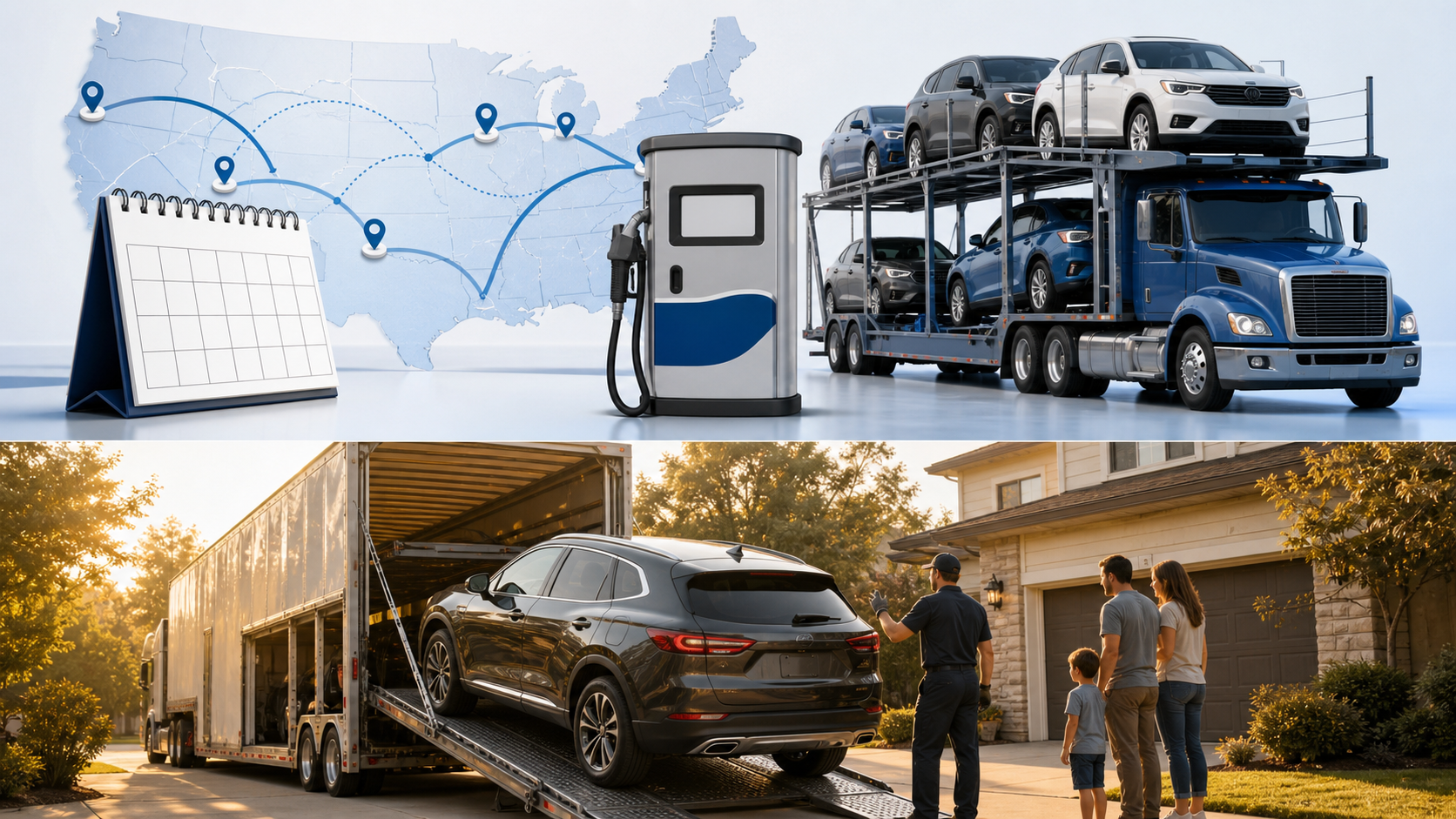
The biggest factors in a 2026 car shipping quote
1. Distance
Longer moves usually cost more total dollars, but less per mile. Short moves can cost more per mile because the carrier still has fixed time, loading, dispatch, and equipment costs.
A 250-mile move is not one-tenth the cost of a 2,500-mile move. The truck still has to get there, load the vehicle, secure it, deliver it, and keep the route profitable.
2. Route strength
Some lanes have steady carrier traffic. Others do not.
Major metro-to-metro routes are usually easier to price. Rural pickups, remote deliveries, islands, military bases, auction yards, and hard-to-reach areas may cost more because fewer trucks are already moving that way.
A Dallas to Atlanta move is a different market than rural Montana to rural Maine. The map may look calm. The load board does not.
3. Diesel prices
Diesel is a major carrier cost. When fuel rises, carrier rates often rise too.
In 2026, fuel volatility is one reason quotes can change quickly. A quote built for last month’s diesel market may not work today, especially on long routes or routes with deadhead miles.
4. Vehicle size and condition
A compact sedan is easier to move than a lifted truck, long-bed pickup, dually, van, SUV, or inoperable vehicle.
Oversized vehicles may take more trailer space. Inoperable vehicles may require special equipment or winching. Modified vehicles may need extra clearance.
More space and more work usually mean a higher quote.
5. Open vs enclosed transport
Open transport is the most common and usually the most cost-effective option.
Enclosed transport costs more because capacity is tighter and the equipment is specialized. It is usually chosen for high-value, classic, exotic, collector, or specialty vehicles.
If the vehicle is a daily driver, open transport is often the practical choice. If the vehicle is rare or expensive, enclosed may be worth it.
6. Timing
Flexible pickup windows help. Rush moves cost more.
Carriers build routes in advance. If you need pickup immediately, the price may need to be stronger to pull a truck onto the load quickly.
Seasonality matters too. Snowbird season, summer moves, military PCS season, tax refund season, auction cycles, and weather disruptions can all affect carrier availability.
Why quotes can vary so much
If you request five quotes, you may get five very different numbers.
That does not always mean one company has a secret discount. Sometimes it means one company quoted the real carrier market and another quoted a low number to win the lead.
The risk with a low quote is simple: no carrier takes it.
Then the broker calls later and says the market changed, or the carrier wants more, or pickup will be delayed unless you approve a higher price.
In many cases, the market did not change. The first quote was never realistic.
What a realistic quote should include
A good car shipping quote should clearly explain:
- Pickup and delivery locations
- Open or enclosed transport
- Vehicle year, make, model, and condition
- Estimated pickup window
- Whether the price is all-in
- Whether a deposit is required
- What happens if no carrier accepts the load
- Whether fuel and current market rates are included
If the quote avoids those details, be careful.
Transcar’s 7-Day Pickup Guarantee
Transcar’s pricing is built around getting the vehicle moved, not just posting a low number and hoping.
Transcar offers a 7-Day Pickup Guarantee. If the vehicle is not picked up within five days of the scheduled window, Transcar will pay the carrier more than what was collected from the customer, out of Transcar’s pocket, to make sure the car moves. Maximum window: seven days. No exceptions.
That is the difference between a quote and a plan.
How to get the best price without getting burned
You can usually improve pricing by:
- Booking early
- Being flexible on pickup dates
- Meeting near a major road if your location is remote
- Choosing open transport when appropriate
- Providing accurate vehicle size and condition
- Avoiding unrealistic “too good to be true” quotes
The cheapest quote is not always the lowest cost. If a vehicle sits for a week, misses a PCS timeline, loses an auction deadline, or forces extra rental car days, the cheap quote did its little magic trick and disappeared.
Bottom line
Car shipping costs in 2026 depend on the real carrier market: distance, route, diesel, timing, vehicle size, and equipment type.
A good quote should explain those factors clearly and be strong enough to get accepted by a carrier.
Need a current car shipping quote? Transcar gives clear pricing based on the actual market, backed by a 7-Day Pickup Guarantee.

About The Author
Aldo Flores
Aldo Flores is the founder and CEO of Trans Global Auto Logistics (TGAL) and Transcar Auto Shippers. With over 25 years in international vehicle shipping and domestic auto transport, he oversees operations across five logistics companies based in Arlington, Texas.


October 22, 2026

October 15, 2026

October 8, 2026

October 8, 2026

August 13, 2026