
Last updated on March 7, 2026
Every auto transport company gives you two options: open or enclosed. Most people pick open. Some people should pick enclosed. Here’s how to know which one is right for your vehicle — without the upsell.
What’s the Difference?
Open transport: Your car rides on an open multi-car carrier — the same trucks you see on the highway hauling 8-10 vehicles stacked on two levels. No walls, no roof. Your car is exposed to weather and road conditions during transit.
Enclosed transport: Your car rides inside a fully covered trailer with hard walls and a roof. Usually carries 2-6 vehicles. Complete protection from weather, road debris, and prying eyes.
That’s it. Same pickup process, same delivery process, same insurance. The difference is the truck.
What Open Transport Costs
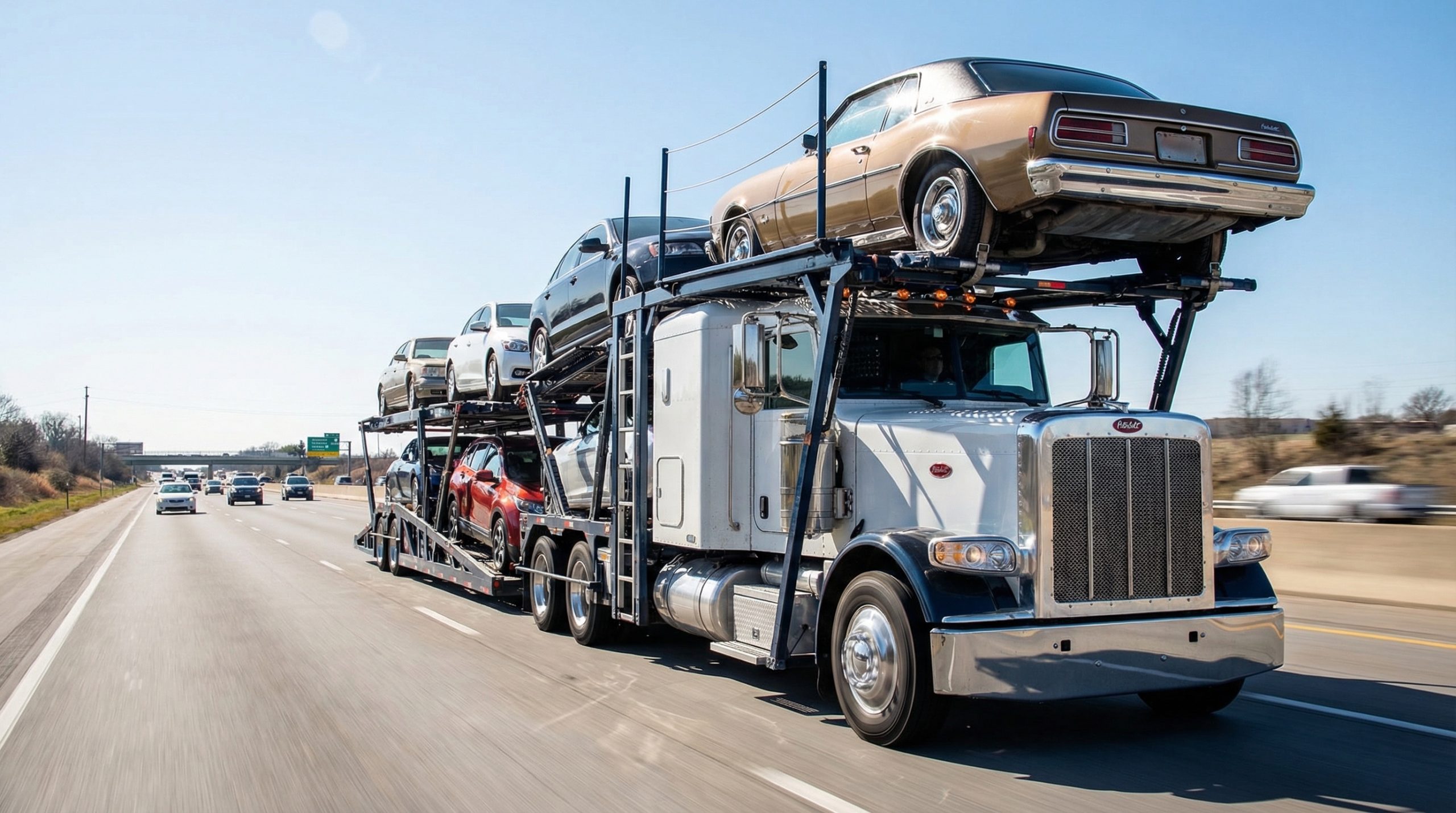
Open is the standard. About 90% of vehicles in the US ship this way.
Typical pricing (2026):
- 500 miles: $400 – $700
- 1,000 miles: $600 – $1,000
- Cross-country (2,000+ miles): $1,000 – $1,500
Open carriers are cheaper because they move more vehicles per trip. More cars on one truck = lower cost per vehicle. Simple economics.
What Enclosed Transport Costs
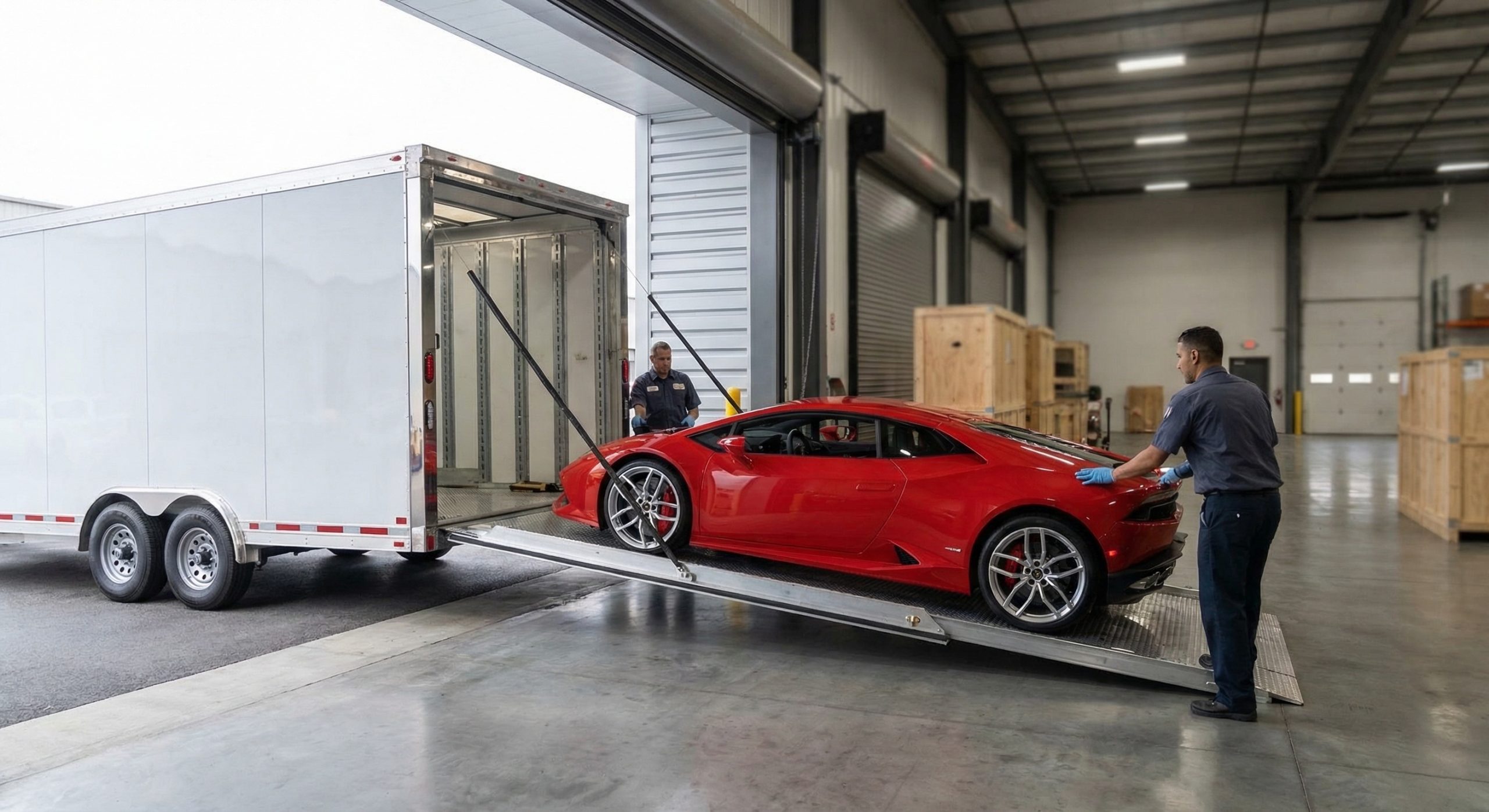
Enclosed runs $300 – $600 more than open for the same route. Sometimes more during peak season.
Typical pricing (2026):
- 500 miles: $700 – $1,100
- 1,000 miles: $900 – $1,400
- Cross-country (2,000+ miles): $1,300 – $2,100
The premium reflects the smaller load size (fewer vehicles per trip), specialized equipment, and the fact that enclosed carriers are in shorter supply.
When to Choose Open Transport
Open is the right choice for:
- Daily drivers (sedans, SUVs, trucks, minivans)
- Vehicles worth under $75,000
- Military PCS moves (extra POVs)
- Dealer inventory transfers (standard models)
- Any vehicle where a minor road chip wouldn’t ruin your day
The honest truth about open transport: The damage rate is under 1%. Most vehicles arrive without a scratch. Yes, your car is exposed to the elements — but so is every car on the road. The carrier is moving at highway speeds, not driving through a sandstorm.
The most common “damage” on open carriers is light dust or dirt from the road. That washes off.
When to Choose Enclosed Transport
Enclosed makes sense for:
- Vehicles worth over $75,000
- Classic cars, especially show-quality restorations
- Exotic and luxury vehicles (Ferrari, Lamborghini, Porsche GT cars, McLaren)
- Rare or irreplaceable vehicles
- Concours-condition cars heading to or from shows
- Brand-new vehicles where the owner wants showroom-fresh delivery
- Low-clearance vehicles (some are too low for open carrier ramps)
The real question isn’t “should I protect my car?” — it’s “what’s the cost of a blemish?”
If a small rock chip on your Honda Accord costs $50 to fix and doesn’t keep you up at night, open transport is fine. If a rock chip on your matching-numbers 1969 Camaro RS/SS affects its value by thousands and makes you physically ill, enclosed is cheap insurance.
What Enclosed Actually Protects Against
Let’s be specific about what enclosed prevents:
- Road debris — rocks kicked up by other vehicles on the highway. This is the #1 risk on open carriers, and it’s still rare.
- Weather — rain, snow, hail, dust storms. Your car arrives dry and clean.
- Sun exposure — matters for vehicles with sensitive paint or convertible tops sitting in transit for days.
- Visibility — nobody can see what’s on the truck. Relevant for high-value vehicles that might attract attention.
- Salt and chemicals — winter road treatments that can affect paint and undercarriage.
What enclosed does NOT protect against: loading/unloading damage (same risk on both types), mechanical failure during transit (same), or acts of God (same). The carrier’s insurance covers all of these regardless of transport type.
The Insurance Question
Both open and enclosed carriers carry cargo insurance. Standard coverage is typically $250,000 – $1,000,000 per load (not per vehicle). Your car is insured either way.
The difference: if something does happen on an open carrier, the types of damage tend to be cosmetic (chips, scratches from debris). On an enclosed carrier, damage is almost exclusively from loading/unloading — and that’s the same risk regardless.
If your vehicle is worth more than standard carrier coverage, you can purchase supplemental transport insurance. We can help arrange this for high-value shipments.
What About Partially Enclosed?
Some carriers offer “soft-sided” enclosed transport — basically an open carrier with a tarp or canvas covering. It’s cheaper than hard-sided enclosed but doesn’t offer the same protection against debris. It blocks weather and sun but not road impacts.
We generally recommend either full open or full hard-sided enclosed. The in-between option isn’t worth the premium over open for most people.
Dealer and Fleet Considerations
If you’re shipping dealer inventory or fleet vehicles:
- Standard inventory: Open transport, every time. The math doesn’t work for enclosed on a $30K sedan.
- High-line inventory (Porsche, Mercedes AMG, BMW M, luxury SUVs): Consider enclosed for customer-sold units where delivery condition affects the sale. Dealer trades and auction-bound vehicles usually ship open.
- Show and display vehicles: Enclosed. No exceptions.
How to Decide: The 30-Second Test
Ask yourself these three questions:
- Is my vehicle worth over $75,000? → If yes, lean enclosed.
- Would a small cosmetic blemish cost me real money (not just annoyance)? → If yes, enclosed.
- Am I shipping to or from a car show, auction, or buyer? → If yes, enclosed.
If you answered no to all three, open transport is the move. Save the money.
Common Misconceptions
“Open transport is dangerous.”
It’s not. Millions of vehicles ship on open carriers every year. Dealerships ship their entire inventory this way. The risk of transit damage is under 1%.
“Enclosed transport guarantees no damage.”
It doesn’t. It significantly reduces the risk of environmental and debris damage, but loading/unloading incidents can happen on any carrier type. What it does guarantee: your car won’t get rained on, dusty, or hit by a stray rock.
“I should get enclosed because my car is new.”
New doesn’t automatically mean enclosed. A new Camry? Open is fine. A new GT3 RS? Enclosed. It’s about value and replaceability, not newness.
“Enclosed carriers are safer drivers.”
The carriers that run enclosed are often owner-operators who specialize in high-value vehicles. They tend to be experienced and careful. But that’s about the operator, not the truck type. Plenty of open carrier drivers are just as skilled.
Get a Quote for Both
Not sure which to pick? We’ll quote you both options so you can compare. The price difference might make the decision for you — or it might be less than you expected.
→ Get Your Quote — select open or enclosed, see the price instantly.
Questions? Call (682) 252-4654 — Lori will give you a straight recommendation based on your vehicle, not our margin.
A Trans Global Group Company

About The Author
Aldo Flores
Aldo Flores is the founder and CEO of Trans Global Auto Logistics (TGAL) and Transcar Auto Shippers. With over 25 years in international vehicle shipping and domestic auto transport, he oversees operations across five logistics companies based in Arlington, Texas.


October 22, 2026

October 15, 2026

October 8, 2026

October 8, 2026

August 13, 2026