
Last updated on March 11, 2026
What FMCSA Is Doing and Why
The Federal Motor Carrier Safety Administration is moving to invalidate commercial driver’s licenses held by non-domiciled drivers — people who obtained a US CDL without establishing actual US residency. The national rule is imminent.
This isn’t a surprise to anyone who tracks FMCSA enforcement. Non-domiciled CDL fraud has been a documented problem for years. Drivers would establish minimal paper residency in a US state, obtain a CDL under that state’s licensing process, then operate commercially without maintaining a genuine US domicile. The fraud matters because it bypasses the medical, drug testing, and safety recordkeeping requirements that apply to US-based CDL holders. FMCSA has been building the regulatory framework to pull these licenses, and that work is now close to completion.
The agency is also acting under pressure from Congress and the commercial trucking industry, both of which have flagged safety risks when large numbers of drivers operate outside the normal accountability structure.
The rule targets drivers who cannot demonstrate genuine US domicile. Estimates put the affected population at 13,000 drivers nationwide.
The Numbers: What 13,000 Drivers Actually Means
Thirteen thousand sounds like a lot. It is. To put it in context:
There are approximately 3.5 million CDL holders in the United States. Thirteen thousand represents roughly 0.37% of that total — a small fraction on paper. But CDL-holder counts don’t translate directly to active carrier capacity. The active truck-driving workforce is smaller than the total CDL population, and within specific sectors like open-carrier auto transport, the labor pool is already tight.
Auto transport runs on specialized equipment. An open car carrier hauling 7–10 vehicles requires a CDL-A, specific equipment endorsements, and experience loading and securing cars correctly. You can’t pull a driver from a different sector and immediately put them on a car hauler. The training and equipment knowledge matters.
Non-domiciled drivers are not evenly distributed across the trucking industry. They tend to cluster in sectors with high route density, thin margins, and high driver turnover — which describes auto transport accurately. If even a fraction of those 13,000 are active auto transport operators, the effect on available capacity is disproportionate to the raw number.
How This Hits Auto Transport
Car carriers are already running near capacity in the first quarter. By May, the market tightens further as summer moving season ramps up. Add a regulatory action that removes a meaningful number of active drivers and the result is predictable: fewer haulers available, longer wait times, rate pressure upward.
The specific effects shippers will feel:

Longer pickup windows. The standard window for domestic auto transport is 1–7 business days from first available date. In a tight market, that window extends. Some routes — particularly in secondary markets away from major interstate corridors — already see 10–14 day pickup windows in summer. With capacity reduced further, expect those windows to stretch.
Rate increases on competitive lanes. When multiple shippers are chasing the same carriers on high-demand routes like California to Texas, Florida to the Northeast, or major metro-to-metro corridors, rates go up. Load boards get competitive. Carriers can afford to be selective.
Fewer options on rural or secondary routes. A vehicle pickup in a major metro like Dallas or Atlanta will always find a carrier faster than one in a small town in Montana or rural Appalachia. Capacity reductions hit thin-coverage areas first and hardest.
Tighter timelines for deadline-driven moves. Customers with hard delivery dates — relocation for a new job, dealer inventory commitments, snowbird seasonal moves — face the most pressure. In a capacity-constrained market, hard deadlines get expensive if you wait too long to book.
What You Should Do Right Now
A few things are within your control. Use them.
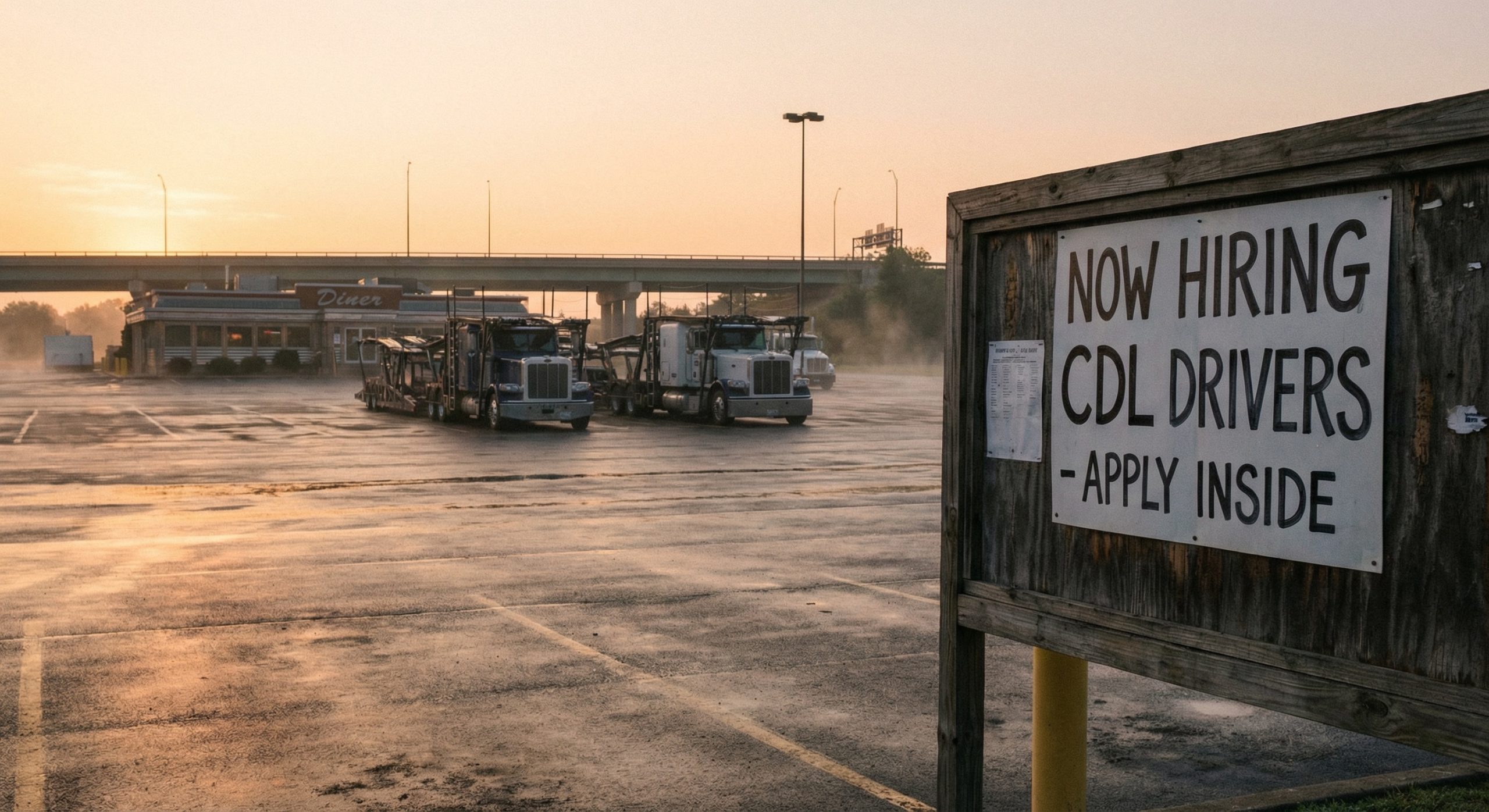
Book early. This one is simple and most people ignore it until it costs them money. If you know you’re moving in May, June, or July — book now. Carriers are available, rates are current, and you’re not competing with the summer surge. Every week you wait narrows your options and increases your rate.
Be flexible on pickup dates. Giving a carrier a 7-day window to pick up your vehicle is meaningfully different from insisting on a specific day. Flexibility makes you easier to match, which gets your vehicle picked up faster at a better rate. If your first available date is genuinely hard and fixed, say so upfront — but if you have flexibility, give it.
Understand how pricing works. Auto transport pricing responds to supply and demand on specific routes at specific times. A quote you get today is not the same as a quote you’ll get in June when the market is tighter. Locking in now, when carriers have capacity, costs less and guarantees space.
Ask questions about carrier selection. Not all carriers are equal. When you book with a broker, ask how they screen carriers — licensing verification, insurance confirmation, equipment standards. With 13,000 drivers potentially leaving the road under regulatory action, you want to know the carriers moving your vehicle are properly licensed and current.
How Transcar Handles It
Transcar operates on Super Dispatch and Central Dispatch, the two primary load boards for domestic auto transport. That gives us visibility into available carrier capacity on any given route in real time. When the market tightens, we see it immediately — and we can adjust how we approach carrier outreach and scheduling accordingly.
We’re not a one-and-done booking platform. When we take your shipment, someone is actively working to match your vehicle to the right carrier on the right timeline. In a normal market, that’s straightforward. In a tight market — which this summer is shaping up to be — it requires more active management and faster decisioning.
Our approach for peak season:
We prioritize customers who give us the most flexibility. That’s not us being difficult — it’s logistics reality. A carrier who has 3 spots on a route going to a specific corridor is going to fill those spots with shipments that fit their load. If your pickup date is rigid and your delivery location is off the beaten path, you’re harder to fill. We work through those constraints, but giving us more flexibility gets your vehicle moving faster.
We also keep carriers accountable. Every carrier we dispatch through Super Dispatch is verified before we assign them. License current, insurance active, equipment appropriate for the vehicle. The CDL crackdown is removing problematic operators — that’s actually good for the industry long-term. In the meantime, carrier quality checks matter more than ever.
Get a Quote Before the Market Tightens
Summer moving season doesn’t care about regulatory disruptions. People relocate. Dealers need inventory moved. The market will get tighter regardless.
Get your quote now. Call us at (682) 252-4654 or visit transcar.com to start the process. We’ll give you a straight answer on current rates and availability for your specific route — no bait-and-switch, no hidden fees.
Booking early is the only move that costs nothing. Waiting costs you rate premium, extended timelines, and stress you don’t need on top of a move.

About The Author
Aldo Flores
Aldo Flores is the founder and CEO of Trans Global Auto Logistics (TGAL) and Transcar Auto Shippers. With over 25 years in international vehicle shipping and domestic auto transport, he oversees operations across five logistics companies based in Arlington, Texas.


October 22, 2026

October 15, 2026

October 8, 2026

October 8, 2026

August 13, 2026