
Last updated on August 6, 2026
If your car shipping quote moved this week, it is probably not random. Domestic auto transport pricing is tied to the real carrier market, and that market is being pulled by three things at the same time: diesel, summer demand, and carrier availability.
The latest industry scan we reviewed on August 3 showed U.S. on-highway diesel at $5.313 per gallon for July 27, 2026, according to the U.S. Energy Information Administration. That was up 17.9 cents from the prior week and up $1.508 from a year earlier. California diesel was listed at $6.670 per gallon, while the Gulf Coast was lower at $5.087.
Those numbers matter because car carriers do not price a move from mileage alone. They price the lane, fuel exposure, empty miles, timing, vehicle type, and whether the load fits the truck’s next route.
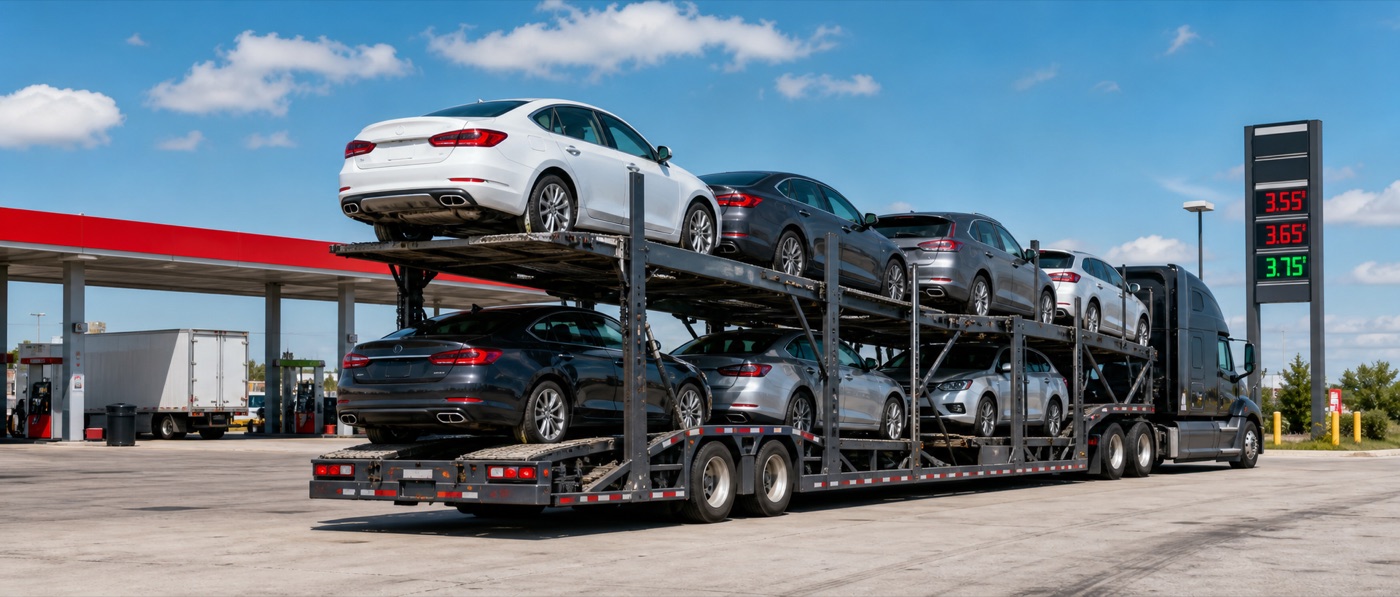
Why diesel still shows up in car shipping quotes
Fuel is not the whole quote, but it is one of the first costs a carrier feels. A full auto transport truck burns a lot of diesel, especially on long-haul routes, mountain lanes, rural pickups, and West Coast trips where fuel prices are higher.
When diesel jumps, carriers get more selective. A load that looked acceptable last week may need a stronger offer this week if fuel moved against the route. That does not mean every shipment should spike overnight. It means the number has to be realistic enough for an insured carrier to accept the job and still make money.
That is the part customers rarely see. A broker can quote almost any number. The market decides whether a real carrier takes it.

Summer demand adds pressure
Summer is peak season for a reason. Families are moving before school starts, military PCS activity is heavier, college students are relocating, dealers are moving inventory, and online vehicle purchases stay active.
More cars needing transport does not automatically mean no carriers are available. But it does mean the good carriers have options. When a carrier can choose between several loads on the same lane, the better-priced and easier-to-handle shipment usually wins.
That is why two similar moves can price differently:
- One pickup is near a major metro; the other is 90 minutes outside the lane.
- One customer has a flexible pickup window; the other needs one exact day.
- One vehicle is stock and running; the other is modified, oversized, or inoperable.
- One route has plenty of return freight; the other leaves the carrier chasing a backhaul.
Mileage matters. But lane quality decides how fast a quote becomes a truck.
Carrier availability is the real bottleneck
The cleanest way to understand car shipping pricing is this: your quote has to attract carrier acceptance.
Carrier availability is not just “how many trucks exist.” It is how many qualified carriers are near your pickup, going toward your delivery area, with room on the trailer, at the time you need service, and willing to accept the price.
That pool can shrink quickly when:
- Diesel rises faster than posted rates
- Pickup or delivery is outside a dense route
- The move is short-notice
- The vehicle needs enclosed transport or special handling
- The requested pickup window is too narrow
- Weather, traffic, auctions, or seasonal volume disrupt routing
This is why a quote may change between Monday and Thursday. The lane may still be the same, but the trucks available for that lane may not be.
Why the lowest quote can backfire
A low quote feels good until the vehicle sits.
In auto transport, the lowest number is not always the cheapest outcome. If the price is below what carriers are accepting on that lane, the shipment can linger on the board while stronger loads move first. Then the customer loses time, storage fees start, travel plans get messy, and the quote has to be raised anyway.
That is the ugly little dock receipt nobody wants to frame.
A realistic quote is not about padding the price. It is about matching the current carrier market so the vehicle gets assigned to a qualified truck without unnecessary delay.
What customers can do to keep the quote stable
You cannot control diesel prices or national moving season, but you can make the shipment easier to cover.
- Book early when possible. More notice gives dispatch more carrier choices.
- Give a workable pickup window. A two- to four-day window usually gives carriers more room to fit the load.
- Be exact about the vehicle. Running condition, modifications, roof racks, oversized tires, low clearance, and added weight all matter.
- Use accessible pickup and delivery locations. Large streets, shopping centers, or nearby safe meeting points can help when residential access is tight.
- Tell dispatch about hard deadlines upfront. Flights, military report dates, auction release deadlines, and storage fees should change the plan.
- Do not chase a quote that is too good to be real. If it will not move at that price, it was not a useful quote.
The best quote balances price, timing, and real carrier acceptance.
When a quote is more likely to move
Some situations are more sensitive than others. Your quote is more likely to change if:
- You wait until the last minute during summer
- Pickup or delivery is rural
- The lane crosses high-fuel markets such as California or the West Coast
- You need enclosed transport
- The vehicle is inoperable, oversized, lifted, lowered, or modified
- You need a very tight pickup date
- The carrier has limited backhaul options near delivery
None of these make the shipment impossible. They just mean the quote needs to be built around the actual work required, not a simple mileage estimate.
How Transcar approaches moving quotes
At Transcar, we would rather explain the market plainly than send a cheap number that does not get accepted. The goal is not to win the inbox for five minutes. The goal is to get the vehicle picked up by an insured carrier at a price that makes sense for the lane.
That is why quote timing matters. If diesel jumps, summer demand tightens, or carrier availability changes on your route, the number may need to adjust. If your dates are flexible or your route is dense, we may have more room to work.
The practical move is simple: check the current rate, share the real details, and let dispatch price the load for acceptance.
Bottom line
Car shipping quotes are moving again because carriers are reacting to diesel, summer volume, and lane-by-lane availability. A quote is not just a number on a screen. It is an offer to the carrier market.
If the offer fits the lane, the pickup window, and the truck’s route, the move gets easier. If it does not, the cheapest quote can become the slowest one.
For the best result, compare price and timing together. That is where the real cost lives.
FAQs
Why did my car shipping quote change after only a few days?
Quotes can change when diesel prices move, carrier availability shifts, or summer demand increases on your route. A quote has to match what qualified carriers are accepting now, not last week.
Does higher diesel always mean a higher car shipping quote?
Not always. Diesel is one cost, but route density, pickup access, delivery area, vehicle type, timing, and backhaul options also affect the quote.
Is the cheapest car shipping quote a bad idea?
Not always, but a quote that is too low for the lane may sit without carrier acceptance. The cheapest useful quote is the lowest realistic price that can still move the vehicle with an insured carrier.
How can I improve my pickup chances during summer?
Book early, give a flexible pickup window, provide accurate vehicle details, and be clear about hard deadlines. Dispatch can plan better when the constraints are known upfront.

About The Author
Aldo Flores
Aldo Flores is the founder and CEO of Trans Global Auto Logistics (TGAL) and Transcar Auto Shippers. With over 25 years in international vehicle shipping and domestic auto transport, he oversees operations across five logistics companies based in Arlington, Texas.


August 13, 2026


